
Friday, 6 pm, the whole neighbourhood loses the network. No Internet, no phone: messages stop going out. In a real crisis, this lasts for days, not hours. That is exactly why an independent communication layer changes everything: a few LoRa boards linked together, and your messages and positions flow with no carrier, no subscription, over kilometres. Here is how to pick your gear.
How it works: radio that needs nobody
LoRa (Long Range) is a radio modulation built for extreme range at very low bitrates (0.3 to 22 kbit/s). On the 868 MHz band — free to use in Europe within the power limits of the SRD regulation — a reliable LoRa link spans several kilometres in open terrain. Meshtastic is the software that turns these boards into a mesh: every node receives a message and relays it to the next one, with end-to-end encryption. The more nodes you have, the further the network grows — no infrastructure, no base station, no bill.
The 5 criteria to choose your LoRa board
1. Frequency band: 868 MHz for Europe
The 915 MHz version is designed for the United States: unusable in France (outside the legal band, degraded range). Always check that the board advertises 868 MHz, or switchable 433-928 MHz.
2. The LoRa chip: SX1276/SX1278 or SX1262
SX1276/78 modules are proven, affordable and cover 433/868 MHz. The SX1262 is the modern generation: better sensitivity, lower power draw — it powers today's Meshtastic nodes.
3. Meshtastic and LoRaWAN compatibility
Not every board is supported by the firmware. Heltec and LilyGO platforms, and ESP32 + SX126x boards, are the best covered by the community: check the supported board list before buying.
4. Battery life: LiPo and power consumption
A fixed node runs for weeks on a properly sized LiPo or 18650 cell. Low-power boards (CubeCell, SX1262) last even longer — essential for a beacon or a relay left in place.
5. Antenna and enclosure
The antenna is half the range: favour a standard connector or an included antenna, and plan a weatherproof enclosure for permanent outdoor use.
Depending on your use
- Hiker or isolated group: one compact battery node per pack — the Heltec Wireless Stick Lite V3 — LoRa 433-928 MHz (ESP32) slips into a pocket and displays your messages.
- Home and neighbourhood: two or three fixed nodes cover a hamlet — the LILYGO LoRa32 V2.1 Board — ESP32 + SX1276 LoRa 868 MHz with OLED screen is the easiest to set up.
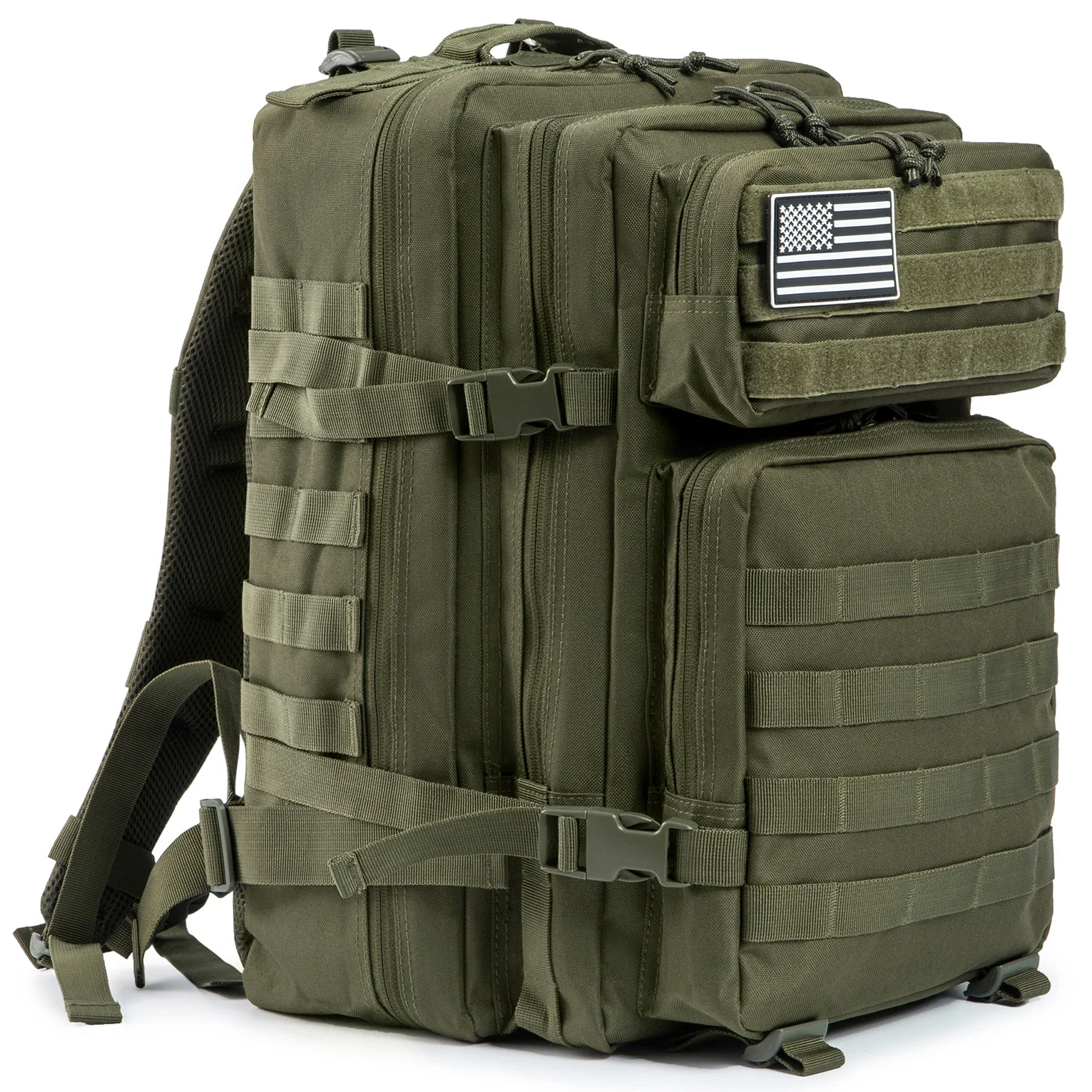
- Bug-out bag: drop a board into your Ultimate survival bag with a spare battery: it weighs almost nothing and keeps a channel open with your group.
- Maker or ham radio: the ESP32-S3 + SX1262 LoRa Dev Board — 868/915 MHz opens the door to home LoRaWAN and battery-powered alert sensors.
Mistakes to avoid
- Buying a cheaper 915 MHz board: outside the European band it is inefficient and off the legal framework.
- Expecting plug-and-play: you must flash the firmware (Meshtastic flashes in minutes via the Web Flasher, but the step is mandatory).
- Skimping on the antenna or mounting it inside a metal enclosure: range drops by 90%.
- Trusting advertised ranges: in forest or urban terrain, count 1 to 3 km between nodes — antenna height matters more than power.
FAQ
What exactly is Meshtastic?
An open-source firmware that turns cheap LoRa boards into a mesh network: text messages, GPS positions and telemetry, encrypted and relayed node to node, with no cellular network or Internet.
Is LoRa better than a walkie-talkie?
They are complementary: a PMR446 walkie-talkie carries live voice, while LoRa radio carries text and positions over greater distances, even automatically overnight.
What is the real range in Europe?
In open terrain with a good antenna up high: 5 to 15 km. In forest or urban areas: 1 to 3 km between two nodes — the mesh compensates by relaying hop by hop.
Is LoRa legal to use?
The 868 MHz band is an SRD (Short Range Device) band, licence-free, within power limits (typically 25 mW to 500 mW ERP depending on the sub-band). Keep the board's 868 MHz setting.
Do I need a subscription or a carrier?
No. No subscription, no SIM card: the network is made of the nodes themselves. Your communication only depends on your own hardware — digital sovereignty in practice.
How long does the battery last?
In standby and relay use, a well-configured board draws a few milliamps: weeks on a 2,000 mAh LiPo, months on a low-power CubeCell.
Our top picks
To start simply, the LILYGO LoRa32 V2.1 Board — ESP32 + SX1276 LoRa 868 MHz ships from Europe and shows everything on its OLED screen. For a compact Meshtastic node to carry anywhere, the Heltec Wireless Stick Lite V3 — LoRa 433-928 MHz (ESP32) is the reference platform. The demanding will pick the ESP32-S3 + SX1262 LoRa Dev Board — 868/915 MHz for its latest-generation chip, and the Heltec CubeCell HTCC-AB02 — LoRaWAN Dev Board (ASR6502) for a sensor node that runs for months on a cell. Finally, the Estardyn ESP32 LoRa Board SX1276 — 868 MHz OLED stays the most affordable way to test a two-node mesh.